Fortune Proto2026-10-19 08:57:18Fortune Protocol partners with X-Agent on AI-driven prediction market use casesFortune Protocol has announced a partnership with AI Agent platform X-Agent to explore how prediction markets can be combined with proactive Personal Agents. The two sides said the collaboration will focus on extending prediction markets beyond simple information lookup and into personalized, action-oriented information services. Under the arrangement, Fortune Protocol will contribute prediction market scenarios and related market data capabilities, while X-Agent will bring its Personal Agent technology and application design strengths. The partners plan to study how AI Agents can continuously track events that users care about, identify shifts in market probabilities, provide background interpretation, and, with user authorization, take further action. The first phase of the partnership will center on application scenario design and concept prototype development, with the broader goal of testing the role prediction markets could play in next-generation personal AI Agents and the Agent Economy.80
Tencent Yuanb2026-10-12 02:23:54Tencent Yuanbao Reportedly Developing "Yuanbao Assistant" With Standalone App PlansTencent’s AI product Yuanbao is reportedly developing a Personal Agent product called "Yuanbao Assistant" and plans to launch it as a standalone app, according to a report cited by ChainCatcher from Dujia. The product is said to focus on long-duration tasks and long-term personal memory. As of publication, Tencent had not responded to requests for comment. The report also said several Tencent business units, including social-related teams, are working on similar products or functions. It listed a series of recent developments in the broader Personal Agent space: Doubao was rumored on Sept. 30 to be preparing a personal assistant app called "Xiaodou"; Ant’s Lingguang app was rumored on Oct. 10 to be testing a feature called "My Life"; Tencent Cloud launched LightVela; and Qianwen announced a Personal Agent plan at the 2026 Apsara Conference. According to the same report, multiple teams began development months before Muse launched overseas. It added that cross-app invocation remains restricted, long-cycle tasks are prone to interruption, and privacy boundaries are still difficult to define, with most products remaining in limited rollout or internal testing.320
a16z2026-10-06 14:11:08a16z’s seventh consumer AI ranking adds just 11 newcomers as personal agents stand outAndreessen Horowitz, or a16z, has released the seventh edition of its consumer AI ranking, and the latest update shows a market that is becoming harder for new products to break into. Across its web and mobile lists, only 11 products appeared for the first time, the smallest number of newcomers since the ranking began. This edition also introduced a new U.S. consumer spending ranking based on YipitData electronic receipt samples, shifting part of the focus from traffic to actual paid usage. The results point to a widening gap between popularity and monetization. Of the top 50 companies in the spending ranking, 29 did not appear in either the web or mobile traffic lists. The spending data also showed a sharp concentration among heavy users. The top 1% of paying users spent an average of $903 per month and accounted for 19.5% of consumer AI spending, more than the combined 16.6% contributed by the bottom 50% of users by spending. The median paying user spent $25 a month. As the leaderboard stabilizes, a16z said Personal Agent is one of the few categories still showing clear expansion, with startups and larger companies alike entering the segment.430
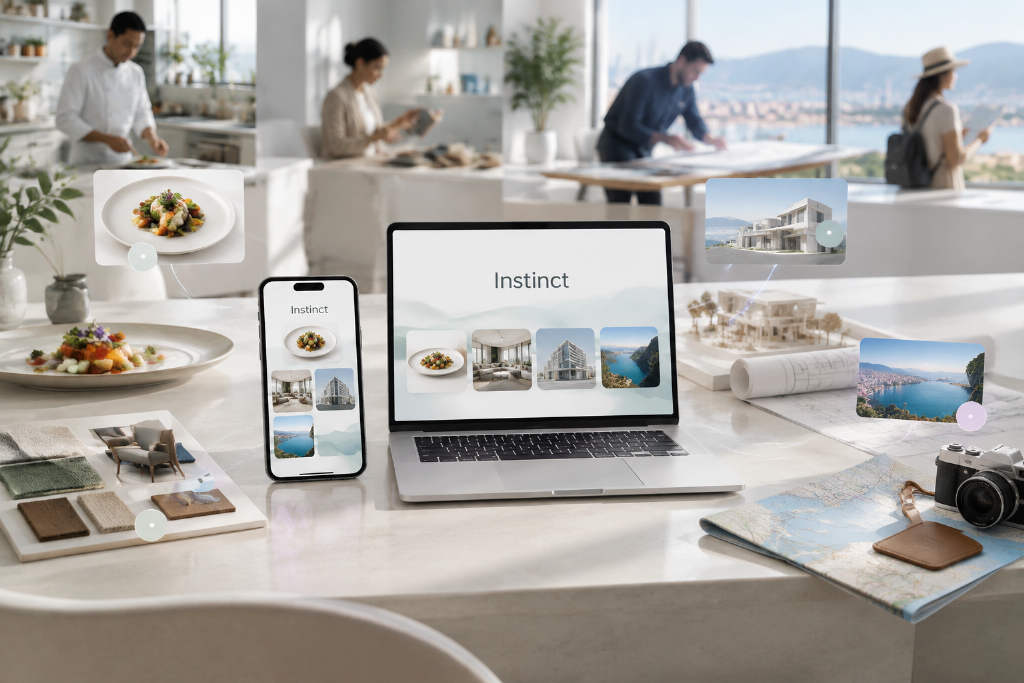
Instinct2026-09-30 07:51:41Instinct adds Selections feature, bringing expert picks into its personal agentPersonal agent assistant Instinct has launched Selections, a new feature that plugs recommendations from real-world experts into its agent product and then filters those options based on a user’s preferences. The company said it plans to work with local chefs, designers, architects, and travel guides, who will curate restaurants, travel routes, and products in their areas of expertise. Instinct then uses those lists to surface choices that match a user’s style, budget, or other stated needs. The rollout draws attention because Noah Shinn recently argued against an ad-driven model in his first public long-form interview. Shinn said personal agents may hold large amounts of user data, and letting brands pay to persuade users to buy things they did not originally want would create an obvious conflict of interest. Instinct’s current plan is to offer the product to users for free and charge commissions to merchants that receive orders through the agent. The company has not said whether merchants can pay to enter recommendation lists, and it has not disclosed whether participating experts are being paid. That leaves an unresolved question over whether future recommendations could be influenced by how much revenue Instinct can earn from a transaction.890
ByteDance2026-09-30 07:44:18ByteDance’s Doubao names personal AI assistant “Xiaodou,” standalone app said to be in testingByteDance’s Doubao has named its personal AI assistant product “Xiaodou,” with a standalone app version also in the plan, according to a Sept. 30 report by Dujia cited by ChainCatcher. The report said the name was finalized during this summer break period and that the product remains in internal testing, with the final public-facing version still subject to change. A separate Sept. 29 report from Sina Tech said Doubao is speeding up work on a personal assistant product and plans to deeply integrate an exploratory internal project code-named “Spell” with Doubao’s existing product lineup. The new product is expected to launch externally relatively soon. As of publication, Doubao had not responded. The report also placed Xiaodou in the context of China’s Personal Agent race. In that lineup, Doubao’s main app handles general conversation, Doubao Work targets enterprise office use, and Xiaodou is aimed at the consumer personal assistant segment. Tencent was previously reported to be secretly developing Handy Bot, while Alibaba’s Qwen team has also proposed building a user-owned Personal Agent. No mature, mass-produced always-on personal Agent product has yet emerged in China, with most offerings still in internal testing or gray rollout preparation.1200
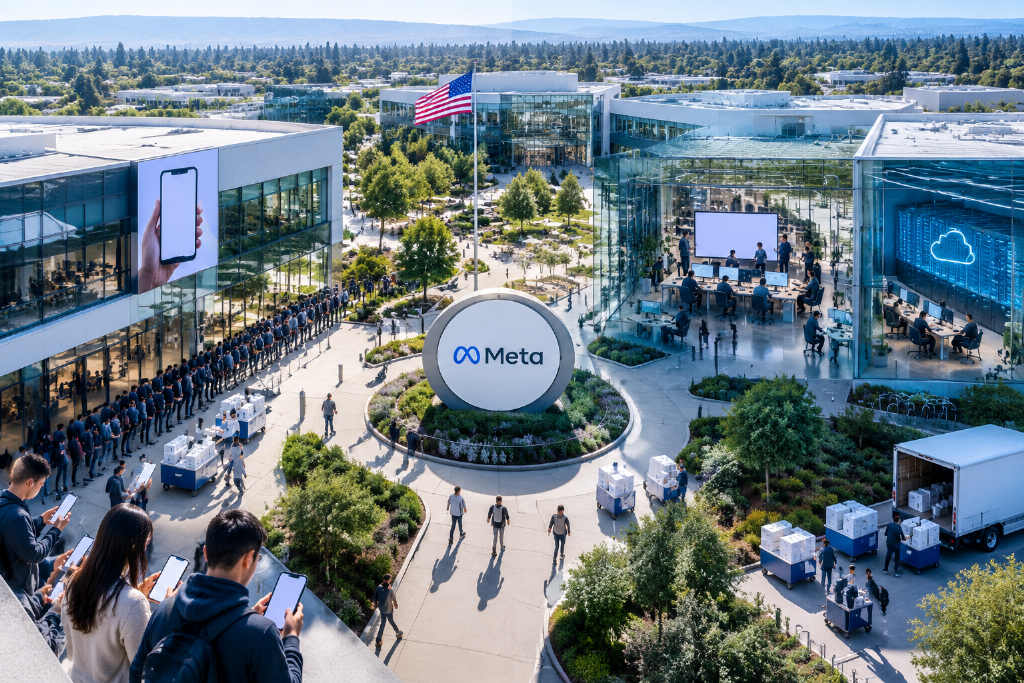
Meta2026-09-30 02:39:23Meta’s Muse sparks a personal-agent frenzy, but the real business case may sit with enterprisesMeta’s new product Muse has quickly become one of the most talked-about AI launches, with more than 2.8 million downloads in its first two weeks and over 3.4 million by Sept. 24, enough to top the free charts on both the U.S. App Store and Google Play. The surge in attention also rippled through the market, with Muse’s Personal Agent narrative at one point helping lift Meta’s market value by nearly $200 billion. The source article argues that this kind of reaction follows a familiar pattern in tech: a breakout product appears, and an oversized narrative about a new category forms almost immediately. In this case, Muse, Manus’s Cue and OpenAI’s Dots have all fed excitement around Personal Agents. Yet the article says that enthusiasm runs into hard constraints, including operating-system control by Apple and Google, the cost of cloud inference for cross-app tasks, and the trust problem that comes with letting software handle payments, emails and purchases. At the same time, Meta has opened another front. On Sept. 28, the company announced Meta Enterprise Platform, led by former MongoDB CEO Chirantan Desai, bundling Muse, Meta Business Agent, Muse API and Muse Code for enterprises and developers. The article’s central point is that while the market is captivated by the idea of a new consumer AI gateway, Meta itself appears to be building for both consumer attention and enterprise monetization.670
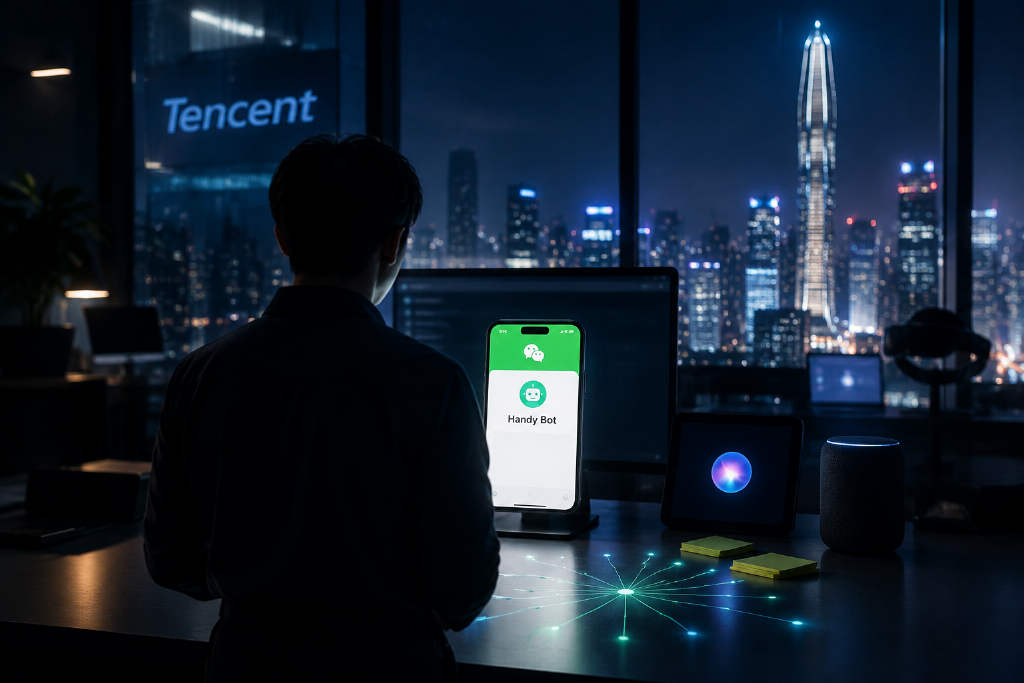
Tencent2026-09-30 00:55:15Tencent reportedly tests Handy Bot, a Personal Agent product tied to WeChatTencent is reportedly developing a Personal Agent product called Handy Bot and plans to launch it as a standalone app, according to Dujia, as cited by ChainCatcher. The report says the product has already appeared quietly as a WeChat service account with the description "Your Personal AI Agent," though it remains in internal testing and official details have not been released. The report places Tencent’s move in the middle of a broader industry push around Personal Agent products. Unlike traditional chatbots that rely on direct conversation prompts, Personal Agents are described as operating around a user’s persistent state and continuing to work on tasks in the background after receiving broader goals. Meta’s recently launched Muse is cited as a key example, with each user assigned an isolated Secure VM environment for browser-based tasks such as price comparison, email handling, and itinerary monitoring. The same report says Chinese tech companies are also exploring the category. Alibaba’s Qwen team has discussed building a Personal Agent for users, while ByteDance’s Doubao has reportedly been developing a personal assistant product under the codename Spell. The report adds that commercialization will depend on balancing model planning ability, ecosystem tool access, and compliance and privacy boundaries.980
Meta2026-08-10 10:11:00Zuckerberg Outlines 'Personal Superintelligence' Roadmap with Open-Source, Distributed PowerMeta CEO Mark Zuckerberg has published a lengthy post outlining a "personal superintelligence" roadmap. The central proposal: superintelligence should be provided to individuals and small businesses worldwide at little or no cost, with Meta continuing to open-source select models to prevent AI power from becoming too concentrated. Meta will focus on building highly privacy-protected personal agents across health management, education tutoring, content creation and entrepreneurship support. The company also plans to push AI infrastructure into local communities, delivering local employment and energy facilities. Zuckerberg argues that widespread distribution of superintelligence offers a better safeguard than a single aligned system, citing employment, national security, cybersecurity and biological risk as areas where "checks and balances" should replace "single superintelligence alignment." He also calls for an independent board to be involved in model safety and release decisions. PANews reported the update on August 10.2040